Home Health & Systems
DIY or Call a Pro: Where the Line Actually Is
Adam Fry-Pierce · July 9, 2026 · 4 min read

Something in the house needs attention. A faucet drips, a door sticks, a light fixture is ugly enough that you've started noticing it every day. You pull up a video, and twelve minutes later someone with a cordless drill has made the whole job look like a pleasant Saturday. So you ask the question everyone asks: can I figure this out?
That's the wrong question. Video has made almost everything look figure-out-able, and for the mechanics of most jobs, it genuinely is. What the tutorial can't show you is the cost of the version where things go wrong. The better question: what happens if I get it wrong? Ask it that way, and nearly every job in your house sorts itself into one of three zones.
Zone 1: worst case, you do it over
Some jobs have consequences that are purely cosmetic: paint, caulk, cabinet hardware, a sticking door, a faucet aerator, a filter change. Get one of these wrong and the punishment is doing it again, slightly annoyed, with a better idea of what you're doing.
This is great DIY territory, and worth doing yourself even when the savings are modest, because each of these small jobs teaches you something about how your house is put together. The tuition for a mistake is a redo and maybe a second trip to the hardware store. The judgment you build at that price is what every harder call in this post runs on.
Zone 2: expensive but contained
The middle zone is where a mistake costs real money but stays local. The guts of a running toilet. A garbage disposal swap. Replacing a light fixture, if you're the kind of person who cuts power at the breaker and then verifies it's actually off before touching anything. Get one of these wrong and you might buy a part twice or mop up a small leak, but the damage has a boundary around it.
The honest test in this zone is follow-through, not skill. Will you actually finish the job this month? A half-done job here is often worse than never starting: a bathroom out of commission, wires capped in a ceiling box, a project stalled at exactly the step that made you nervous in the first place. If you know from experience that you're a strong starter and an unreliable finisher, treat that as useful information about yourself. It's a perfectly good reason to hire out a job you could technically do.
Zone 3: when a mistake follows the house
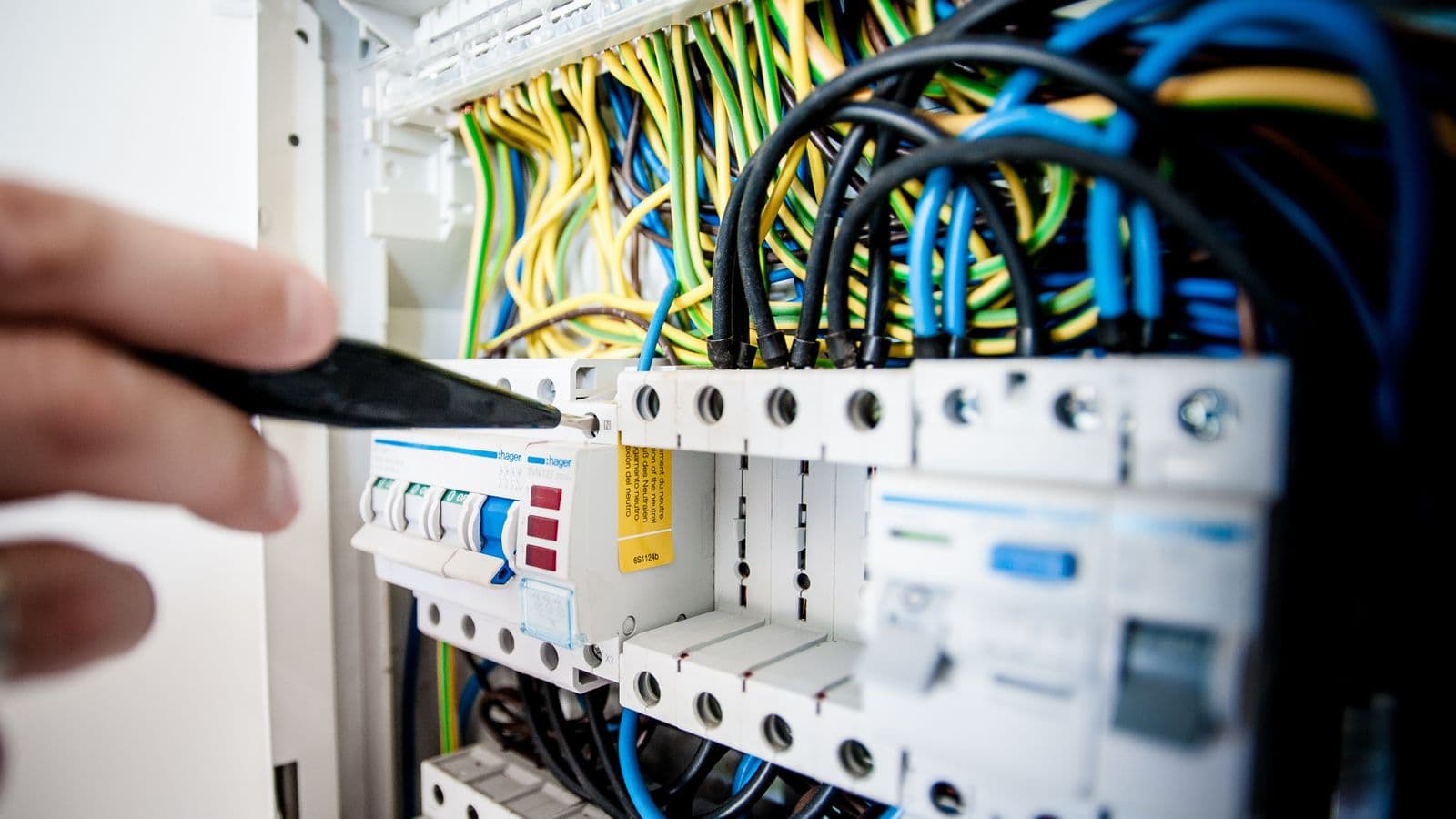
Then there's the zone where "can I figure this out" stops mattering entirely, because the consequences of getting it wrong are catastrophic, invisible, or legal. Anything inside the electrical panel. Gas lines and structural changes. Roof work, where the real hazard is the falling, not the shingles. The main drain or sewer line. And anything your jurisdiction says requires a permit and a licensed trade, which varies by where you live and is worth actually checking.
Getting one of these wrong can mean fire, flood, or injury. It can also mean an insurance claim denied because the work wasn't done by someone licensed to do it, or a problem that surfaces years from now, when a buyer's inspector finds work no permit was ever pulled for. Unpermitted work doesn't leave when you do. It follows the house, and it tends to come up at the worst possible moment, which is usually during a sale.
Two things sit next to this zone without being in it. On an aging system, whether to fix it at all comes before who does the fixing: patching an old furnace yourself can be the wrong call twice over, so run the repair or replace math first. And deciding a job needs a professional is a different problem from actually finding a good one, which is why who to call gets its own answer.
Whichever zone it is, write it down
The zones tell you who should do the work. The record of what was done, and by whom, is what makes every future decision easier. The faucet you swapped yourself, the disposal a plumber put in, the panel work an electrician handled with a permit on file: each of those is a fact about your house, and future you (or a future buyer's inspector) will want it.
Reyn keeps that record. Every job logs against the system it touched, with dates and who did the work, so your house's history is something you look up instead of something you try to remember. And on the Zone 3 days, when the answer is clearly a professional, Reyn is also the shortest line to the people your agent already trusts. You make the judgment call. Then you hand the job to someone who does this for a living, and you write down that you did.
For homeowners
Reyn comes as a gift from your agent.
Free for you. Tell us who your agent is and we'll send them one note that you asked. No spam, no follow-ups.
More on Home Health & Systems

Home Health & Systems
The Fall Checklist That Actually Prevents Winter Damage
Most fall checklists are forty items long. These are the handful that actually prevent expensive winter damage.
Home Health & Systems
Recalls Quietly Sitting in Older Homes
Electrical panels, water heaters, dishwashers: recalls don't come find you. Here's how to check what's already installed.
Home Health & Systems
Repair or Replace: The Math Behind Every Aging Home System
Every big system in your house hits a fork eventually. Here's the actual math for deciding which side of it you're on.